Antique shop website checklist: invite collectors to explore
Start an antique shop website with the kinds of pieces you carry, photographs you can use, opening hours and a way to ask about an item. Add clear visiting and purchase details, then decide how you will keep changing stock accurate. Use the checklist as you gather materials for your storefront.
Want this built for you? See the top of your own page free before paying.
By Luis Junior
Show the character of your collection
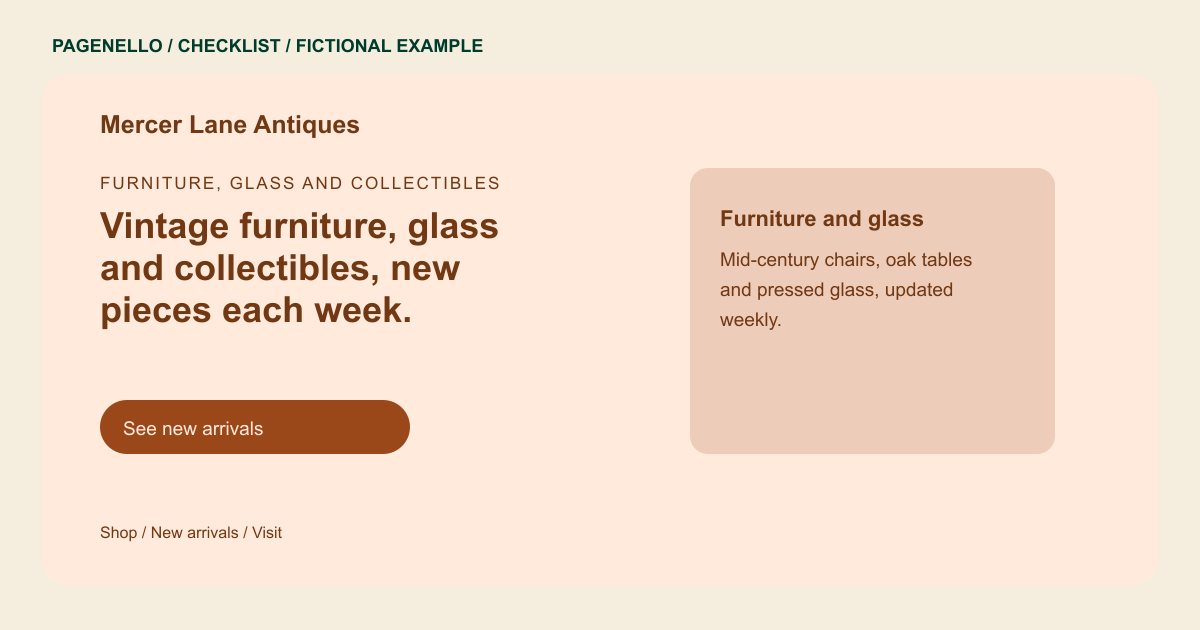
Choose photographs that represent your actual mix, such as furniture, ceramics or vintage lighting. For featured pieces, provide dimensions, condition and provenance only when known. Mark an item sold or remove it promptly so an old photograph does not suggest availability.
Explain how a buyer can proceed
Tell visitors whether to call, email or visit to ask about a piece. If you sell through an existing marketplace, link directly to your shop there. Describe pickup, delivery or shipping arrangements only as your store actually offers them.
Help people plan an in-person visit
Gather regular opening hours, address and a map link. If you buy from the public or accept consignments, explain the first step and the types of objects you consider. Keep fair dates or special closures current.
Antique shops: checklist
Questions about antique shop websites
Do I need to list every antique online?
A small selection can show the character of your shop. Choose pieces you can keep current, or link to the marketplace where you already maintain your inventory.
How should I describe an object’s history?
Share the provenance you can substantiate and identify uncertainty. Measurements, materials and visible condition can still help a buyer evaluate a piece. Label reproductions accurately when you know their origin.
Can visitors buy directly on a Pagenello page?
A new online store is outside the package. Your page can link to an existing shop or invite buyers to call or email about a piece.