Sign shop website checklist: turn project details into a quote
A sign shop website needs to show what you make and help a buyer start a useful quote conversation. Organize products by type, select photographs of completed work and explain your process from artwork to installation. This checklist helps you gather the details before the page is built.
Want this built for you? See the top of your own page free before paying.
By Luis Junior
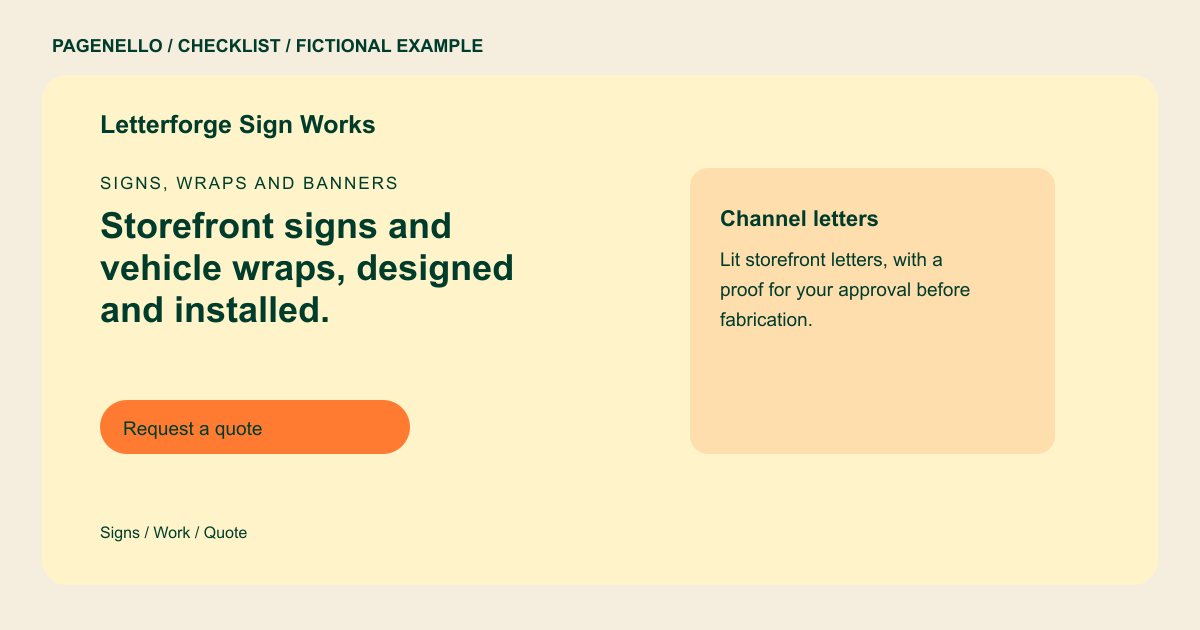
Group finished work by the buyer’s need
A storefront owner may look for exterior lettering while a fleet manager needs vehicle graphics. Separate the sign types you produce and add a few relevant project images. Caption the material or application accurately, and secure permission before displaying a customer’s branding.
Explain the decisions behind an estimate
Tell buyers what your team needs to quote: sign type, approximate dimensions, quantity, location and desired timing. If artwork is available, explain how you prefer to receive it through your existing process. Make clear that a price depends on the project specifications.
Clarify production and installation
Outline how your shop handles design, proof approval, fabrication and installation. State which steps you provide and whether the customer must arrange anything separately. Permit responsibilities vary by project and location, so describe your actual role rather than promising approval.
Sign shops: checklist
Questions about sign shop websites
Should every type of sign have its own gallery?
Start with a few labeled examples for the products you want to feature. A longer portfolio can use an additional page for $190. Label each example with the type of sign your shop produced.
Can buyers upload artwork to this page?
File uploads are outside the standard package. Direct buyers to your existing file-sharing or quote process, or ask them to contact your shop first. Tell customers which file specifications your sign shop needs first.
How should I describe permits?
Say exactly which permit tasks your shop handles and which the buyer or another party arranges. Check local requirements for each project. Describe your shop’s actual role before the buyer requests a quote.