Translator website ideas for a clearer project inquiry
A translator website can help a prospective client check language direction and subject fit before requesting a quote. Fictional Lexicon Word Works illustrates a practice presenting language pairs and document types. Adapt the example to your own working languages, experience and process, and share only credentials you actually hold.
Want a page designed for your business? See the top of your own page free before paying.
By Luis Junior
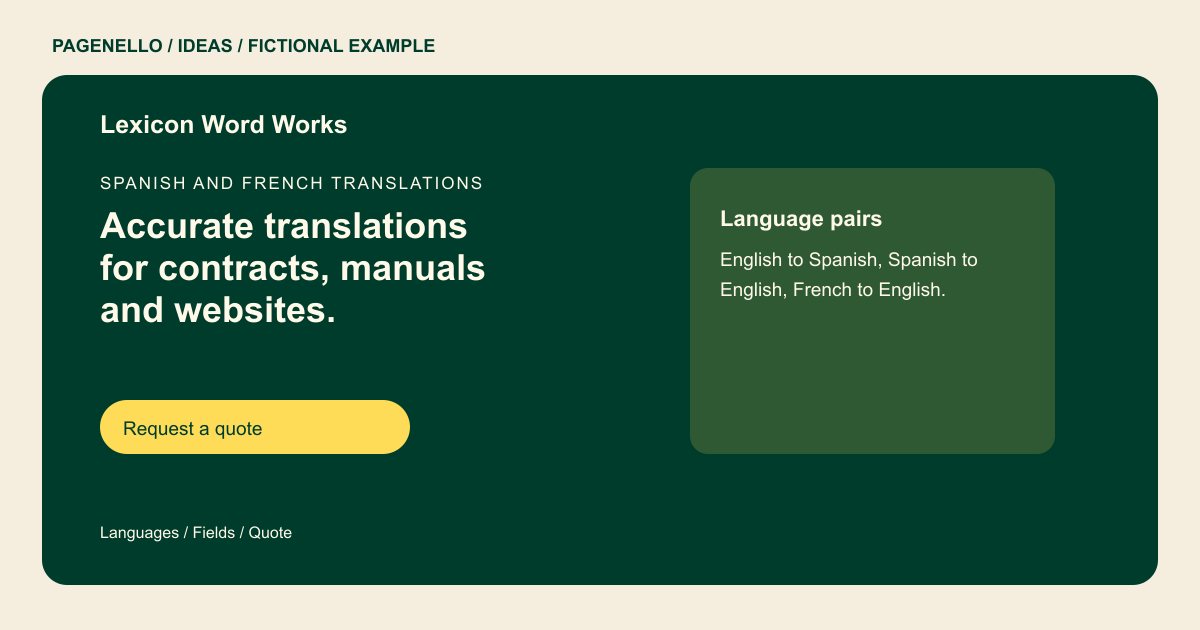
Spanish and French translations
Accurate translations for contracts, manuals and websites.
English to and from Spanish and French, with a clear quote before work starts. Send your file by email and get a turnaround date within a day.
Show direction, not just languages
Lexicon lists English to Spanish and French to English as distinct pairs. That distinction matters when a client needs a document translated into a particular language. Name each direction you accept; do not imply that every pair works both ways.
Connect specialties to actual work
A concise field list can show the kinds of material you handle, from technical manuals to marketing copy. If you display samples, obtain permission and remove confidential material. List professional credentials precisely, checking any claims and rules that apply to your services.
Explain how a quote starts
Tell a client which project details you need, such as language direction, document type and deadline. The example points to email for files. If material is sensitive, explain your own preferred secure process instead of inviting clients to send it through a public page.
Translators: ideas
| Idea | Use |
|---|---|
| Language-pair cards | Give each source-to-target direction its own line, so a reader can immediately identify a match. |
| A subject-focused layout | Choose one or two specialties and describe the documents you work with. Replace the fictional fields with your own. |
| An editorial portfolio | Show an authorized excerpt with context on the task and your role. Leave client names and content private when permission is absent. |
| A credentials panel | Identify the actual issuing organization, credential and language direction where relevant; do not imply a membership is a certification. |
| A quote preparation guide | Place deadline, word count and file format prompts near the inquiry email, along with your instructions for sensitive documents. |
Questions about translation websites
Is Lexicon Word Works a real client?
No. The practice is fictional and the example is a demonstration of how information might be arranged. Use your own language directions, qualifications and contact process when adapting the layout.
Can a client upload a document to the page?
File uploads are outside the package. The page can point to your existing email or another service you use for receiving documents. Review your confidentiality obligations when choosing how to receive sensitive documents.
Can I show a sample translation?
Use work you have permission to share and check confidentiality obligations first. A self-created sample can illustrate your approach without exposing client material. Confirm that the sample represents the language direction and subject you actually work in.
How should I describe certification?
State the exact credential and scope you hold. Verify applicable professional or recipient requirements before making claims about a certified translation. Name the issuing body accurately and avoid suggesting a broader authority than the credential grants.